Sewage Cleanup and Sanitization in Honolulu
24/7 sewage cleanup and sanitization in Honolulu and surrounding areas. Call (808) 349-3407.
When a sewer line backs up or a septic system overflows, the water flooding your bathroom or utility room isn’t just dirty — it’s classified as Category 3 “black water” under industry standards, meaning it carries raw sewage, bacteria, and pathogens that can colonize porous materials within hours. The clock starts the moment sewage touches your floors, walls, or subfloor. Waiting even a day to call can turn a contained cleanup into a full gut-and-rebuild situation.
What sewage cleanup and sanitization actually involves
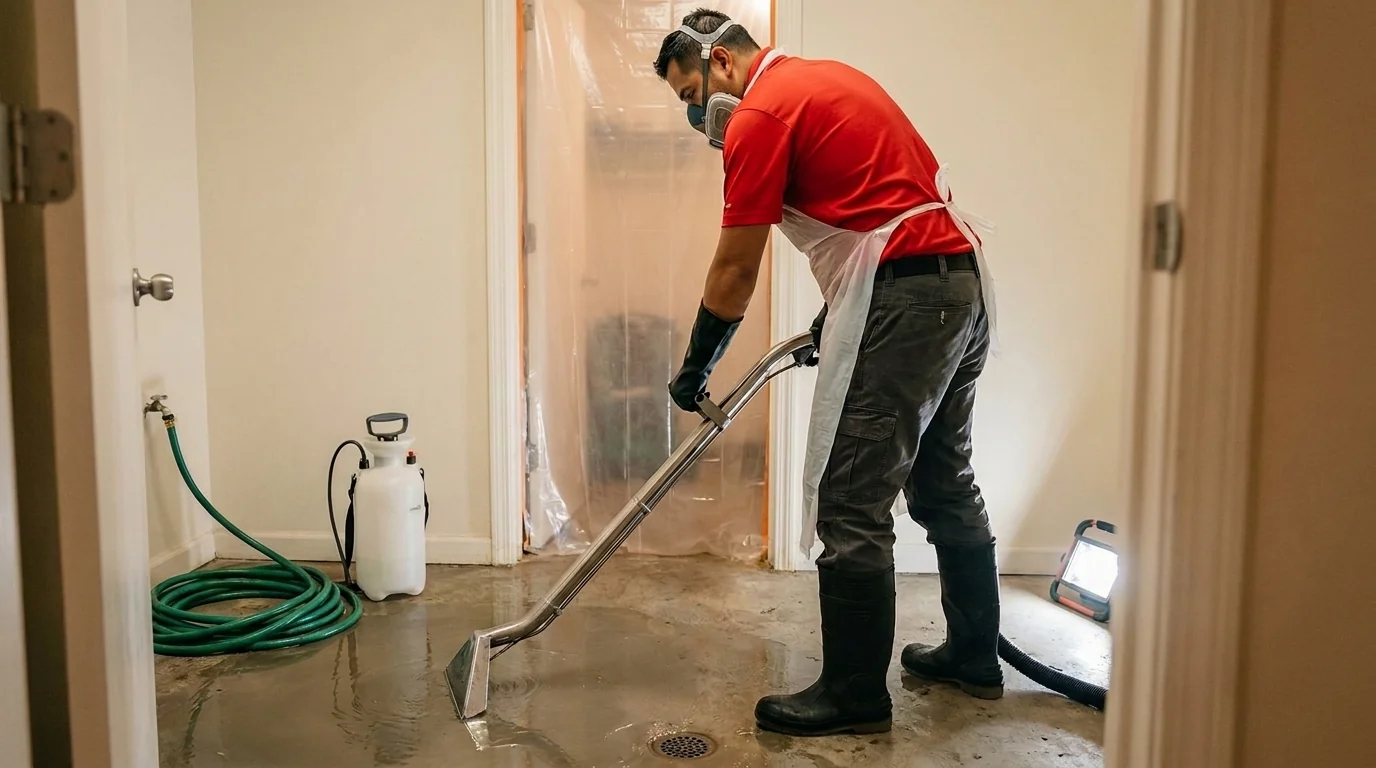
Sewage backup cleanup is one of the most technically demanding jobs in residential restoration. Unlike a clean water leak from a supply line, raw sewage removal requires full personal protective equipment for every technician on site, controlled disposal of contaminated materials, and a multi-stage sanitization protocol — not just extraction and drying.
The contamination is invisible after the water recedes. Sewage water wicks into drywall, soaks into subfloor plywood, and saturates carpet padding in minutes. The smell — that sharp, sulfurous odor that lingers even after surfaces look dry — is a reliable indicator that bacterial contamination is still present. Standard wet-vac extraction and a fan won’t resolve it.
Equipment used on a proper sewage response includes truck-mounted or portable extraction units capable of handling solid-laden water, commercial-grade air movers and dehumidifiers rated for Category 3 conditions, HEPA-filtered negative air machines to prevent cross-contamination to unaffected rooms, and EPA-registered disinfectants applied at dwell times long enough to actually work. The timeline from initial extraction to clearance typically runs three to five days for contained incidents, longer when structural materials have been saturated or when septic overflow has reached a crawl space.
Our process
-
Containment and hazard assessment. Before any water is moved, the affected area is isolated with physical barriers where needed to prevent sewage-contaminated air and particulates from spreading. The source — whether a backed-up main line, a failed septic system, or an overflowing toilet — is confirmed as stopped before cleanup begins. Technicians suit up in full PPE: gloves, respirators, and protective suits rated for biological hazards.
-
Solid and liquid waste extraction. Sewage water often carries solids that standard pumps can’t handle cleanly. Extraction equipment is selected specifically for black water — removing standing water, sludge, and debris before any structural assessment can happen. Contaminated material that can’t be decontaminated (saturated carpet, padding, compromised drywall) is bagged, sealed, and disposed of according to applicable waste handling requirements.
-
Structural material removal and drying preparation. Porous materials that have absorbed sewage — baseboards, drywall up to the saturation line, saturated subfloor sections — are removed rather than dried in place. Drying contaminated porous materials without removing them first traps pathogens inside the structure. Once non-salvageable material is out, air movers and dehumidifiers are positioned to begin drying the structural cavity.
-
EPA-registered disinfection and deodorization. All affected surfaces — concrete, framing, remaining subfloor, walls — are treated with EPA-registered hospital-grade disinfectants applied at manufacturer-specified dwell times. This step is repeated, not done once and considered complete. Deodorization follows, addressing the volatile organic compounds that cause sewage odor to persist even after surfaces are dry.
-
Moisture verification and documentation. Moisture readings are logged at multiple points throughout drying. Final readings confirm that structural materials have returned to acceptable moisture levels before the area is considered ready for reconstruction. Photographs and moisture logs from each stage are documented — useful for your own records and for any insurance claim you file.
What separates a good sewage response from a bad one
The most common mistake in sewage backup cleanup is treating it like a water damage call. Technicians who extract the water, run fans for a few days, and apply a surface spray are leaving contamination behind — often inside wall cavities and under flooring where it continues to grow.
A few things that experienced operators do differently:
- They remove, not just dry, contaminated porous materials. Drywall and carpet padding that have absorbed black water cannot be safely dried in place. The contamination is in the material, not just on the surface.
- They verify the source is resolved before cleanup starts. Starting extraction while a sewer line is still backing up wastes time and re-contaminates cleaned areas.
- They document moisture readings at every stage. Without baseline and final moisture logs, there’s no way to confirm drying is complete — and no record if a dispute arises later.
- They use disinfectants at correct dwell times. An EPA-registered disinfectant applied and immediately wiped off doesn’t meet the contact time required to kill sewage-borne pathogens. This step is frequently rushed.
Insurance adjusters reviewing sewage claims look for documentation of Category 3 classification, a clear scope of what was removed versus what was dried in place, and evidence that disinfection was performed — not just extraction.
Seasonal and regional considerations
Honolulu’s aging sewer infrastructure and the island’s heavy rainfall patterns create predictable pressure points. Heavy rain events — especially the extended periods that hit windward Oahu and the urban core between November and March — can overwhelm municipal sewer capacity, driving backups into lower-level fixtures in older homes. Properties in Kalihi, Palama, and parts of Kaimuki with older clay or cast-iron sewer laterals are particularly vulnerable. Septic systems on properties in less-densely served areas of the island face their own seasonal stress when the water table rises after prolonged rain, reducing the drain field’s ability to absorb effluent.
Service area
AAA Water Damage Restoration & Carpet Care handles sewage backup cleanup and sanitization services across Honolulu and surrounding communities including Pearl City, Aiea, Kaneohe, Kailua, Mililani, and Ewa Beach. Dedicated service-area pages cover the specifics of each community.
If sewage has backed up into your home, call (808) 349-3407 now to start the removal process — the sooner contaminated material is extracted and the space is disinfected, the less structural damage you’ll be dealing with when it’s time to rebuild.
Frequently Asked Questions
What is Category 3 water, and why does it change how sewage cleanup is handled?
How quickly does sewage contamination spread into walls and floors?
Can sewage-soaked drywall or flooring be dried and kept, or does it have to be removed?
What should I do — and avoid doing — while waiting for the cleanup crew to arrive?
How do I know when the sewage cleanup is actually complete — what does a proper clearance look like?
Looking for the best sewage cleanup and sanitization company in Honolulu?
AAA Water Damage Restoration & Carpet Care provides sewage cleanup and sanitization in Honolulu, HI and the surrounding area. We answer calls 24/7 — call (808) 349-3407 for immediate help.
Need Sewage Cleanup and Sanitization now?
We respond 24/7 across Honolulu and surrounding HI cities.
Related Coverage
- Our Restoration Services
- Contact AAA Water Damage Restoration & Carpet Care
- Sewage Cleanup and Sanitization in Aiea
- Sewage Cleanup and Sanitization in Aina Haina
- Sewage Cleanup and Sanitization in Diamond Head
- Sewage Cleanup and Sanitization in Ewa Beach
- Sewage Cleanup and Sanitization in Hawaii Kai
- Sewage Cleanup and Sanitization in Honolulu
- Sewage Cleanup and Sanitization in Kahala
- Sewage Cleanup and Sanitization in Kailua
- Sewage Cleanup and Sanitization in Kaimuki
- Sewage Cleanup and Sanitization in Kaneohe
- Sewage Cleanup and Sanitization in Kapolei
- Sewage Cleanup and Sanitization in Mililani
- Why You Can't DIY Sewage Backup: The Health Risks Nobody Warns You About