Sewage Cleanup and Sanitization in Diamond Head
24/7 sewage cleanup and sanitization in Diamond Head, HI. Call (808) 349-3407.
Our technicians are dispatched from our Honolulu, HI headquarters and are typically on-site in Diamond Head within 60 minutes of your call.
The cast-iron drain stacks running through the Gold Coast’s mid-century oceanfront co-ops were never designed to outlast a half-century of salt-laden Pacific air. When one of those corroded lines finally lets go — or a sewer backup pushes raw sewage up through a ground-floor unit’s floor drain — the contamination spreads fast through shared walls and concrete subfloors that have absorbed decades of moisture. If you’re dealing with sewage in a Diamond Head property right now, call (808) 349-3407. Crews are available around the clock.
Why Diamond Head Properties Face Elevated Sewage Backup Risk
The stretch of coastline between Waikiki and Kahala presents a specific combination of factors that makes sewage events more likely — and more complicated — than in newer inland neighborhoods.
The Gold Coast’s co-op and condo buildings, most constructed in the 1950s and 1960s, rely on vertical cast-iron plumbing that was already aging when the buildings were sold to their first residents. Salt spray accelerates corrosion on risers, stack vents, and cleanout valves at a rate that inland properties simply don’t experience. A pinhole breach in a shared riser doesn’t just affect one unit — it can push sewage-contaminated water through ceiling assemblies and into the unit directly below, sometimes two or three floors down before anyone notices the smell.
Estate properties around Black Point face a different but related challenge. Older private lateral lines running from the home to the city sewer main can collapse or root-intrude over time, especially in areas where mature landscaping has been in place for decades. When those laterals back up, the sewage has nowhere to go but back through the lowest fixture in the house.
The 96816 ZIP code also sits in a zone where the water table is relatively shallow. During heavy rain events — the kind that roll off the Ko’olau Range and funnel toward the coast — hydrostatic pressure can overwhelm aging sewer infrastructure, pushing surcharges back through private laterals even when the pipes themselves are intact.
Our Sewage Cleanup and Sanitization Process in Diamond Head
Raw sewage is classified as Category 3 water — the most contaminated classification in the industry. That means the response protocol is more involved than a standard water loss, and the margin for cutting corners is zero.
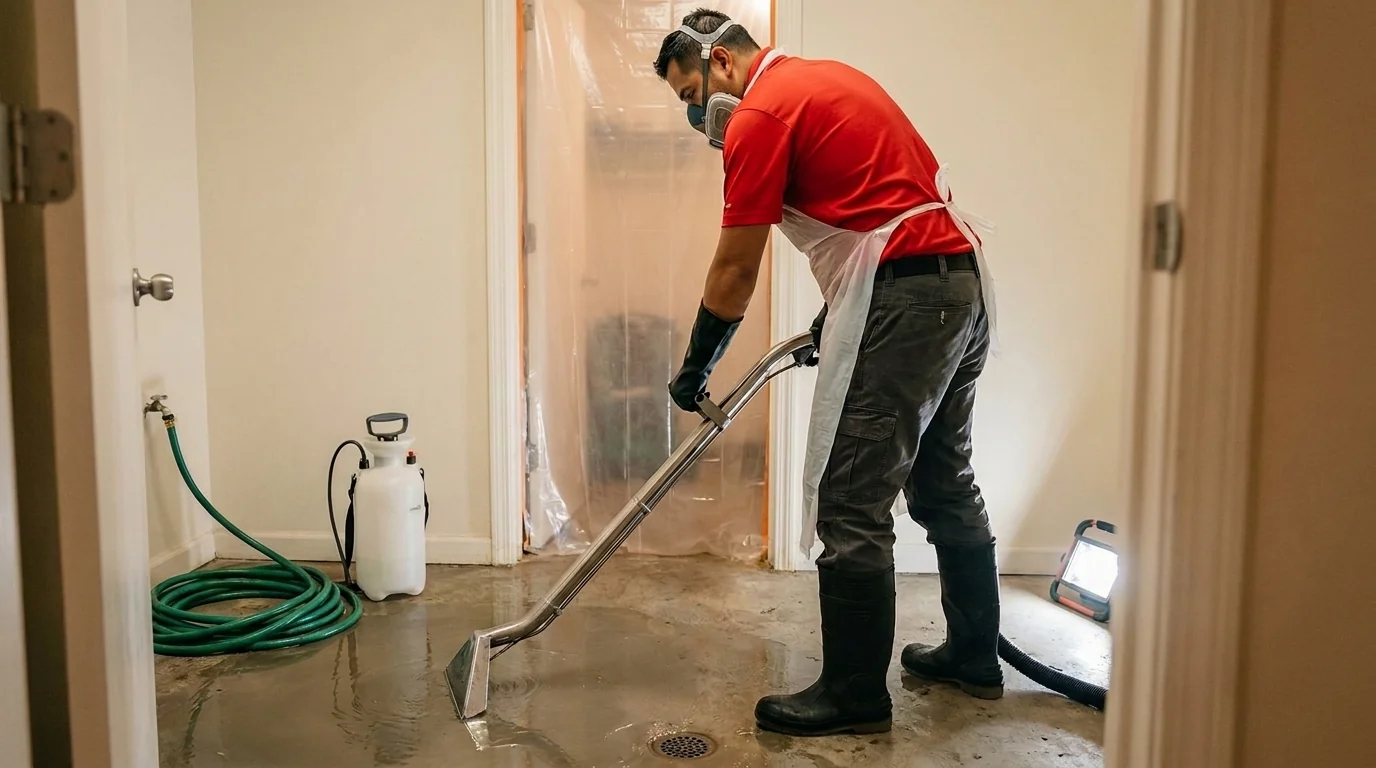
When the crew arrives, the first priority is stopping the source if it hasn’t been addressed already. That may mean coordinating with a licensed plumber to cap the line before cleanup begins. Once the source is controlled, the work moves in a defined sequence:
Containment and PPE setup. In a multi-unit building — the kind common along the Gold Coast — this step also involves notifying the resident manager and, where required, the co-op board, so adjacent units can be assessed for secondary intrusion.
Extraction of standing sewage. Truck-mounted extraction equipment removes liquid waste and solid debris. In concrete-subfloor buildings, this stage takes longer than in wood-frame construction because the material is less porous but harder to fully evacuate from seams and expansion joints.
Removal of contaminated materials. Drywall, insulation, flooring, and cabinetry that have absorbed Category 3 water cannot be dried in place — they have to come out. For Black Point estate homes with high-end hardwood flooring or custom cabinetry, the crew documents condition before any material is removed, which matters when the homeowner is working through an insurance claim.
Antimicrobial treatment and sanitization. All affected structural surfaces are treated with EPA-registered disinfectants. This step addresses bacteria, pathogens, and odor-causing compounds that persist even after visible waste is removed.
Drying and monitoring. Commercial dehumidifiers and air movers run until moisture readings in walls, subfloors, and concrete return to pre-loss baselines. In Diamond Head’s coastal humidity, this phase is actively managed — ambient moisture in the air works against the drying equipment if the setup isn’t calibrated for the conditions.
HOA and Co-op Board Coordination in Diamond Head Buildings
Sewage events in multi-unit buildings generate paperwork that a solo homeowner’s claim never does. Co-op boards along the Gold Coast typically require written documentation of the scope of contamination, the materials removed, and the sanitization methods used — both for their association insurer and to satisfy other residents who share walls or ceilings with the affected unit.
The crew photographs and documents every stage of the job: pre-demo conditions, materials removed, post-sanitization surfaces, and final moisture readings. That documentation package is yours to share with the board, the association’s insurer, or your own carrier. Photographing the damage yourself before any work begins is also worth doing — insurers consistently note that early photos support faster claim processing.
If the building’s management requires a scope-of-work review before demolition begins, call ahead and let the crew know — that coordination can happen by phone before anyone arrives on site.
Local Note: Salt Corrosion and Stack Vents in Coastal High-Rises
One thing that comes up repeatedly in Gold Coast buildings is failed stack vent caps on the roof. Salt air degrades the rubber gaskets and metal collars around vent penetrations, and once those seals go, negative pressure in the drain system can pull sewer gas — and eventually sewage — back toward the lowest open fixture in the building. If a unit near Kapiolani Park frontage is experiencing recurring drain gurgling or sewage odors without an obvious backup, the stack vent is worth inspecting before assuming the lateral line is the problem. A plumber can scope it from the roof; it’s a faster diagnosis than pulling up flooring to chase a leak that isn’t there.
Sewage contamination in a Diamond Head property — whether it’s a Gold Coast co-op unit, a Black Point estate, or a smaller residence in Diamond Head Terrace — moves faster than most homeowners expect. Call (808) 349-3407 any time, day or night, and a crew will be dispatched from Honolulu to begin assessment and extraction.
Sewage Cleanup and Sanitization in Diamond Head: Service Coverage
Frequently Asked Questions
How fast can you arrive for sewage cleanup and sanitization in Diamond Head?
How quickly can you reach the Gold Coast or Black Point area for a sewage emergency?
Do Gold Coast co-op buildings in the 96816 ZIP code have special requirements for sewage cleanup work?
Why do sewage backups in older Diamond Head buildings tend to affect multiple units at once?
What does Category 3 sewage cleanup actually involve, and how long does it take?
Are sewage cleanup costs in Diamond Head typically covered by homeowners or condo association insurance?
Sewage Cleanup and Sanitization response in Diamond Head
Most Diamond Head calls see a technician on-site within 60 minutes from our Honolulu headquarters.