
Mold Inspection and Testing in Kaimuki
24/7 mold inspection and testing in Kaimuki, HI. Call (808) 349-3407.
Our technicians are dispatched from our Honolulu, HI headquarters and are typically on-site in Kaimuki within 60 minutes of your call.
Single-wall construction and century-old drain lines make Kaimuki one of Honolulu’s most mold-vulnerable neighborhoods — and most homeowners don’t realize there’s a problem until they smell it in a closet or notice a child’s allergies flaring. The wood-frame homes that line the streets off Waialae Avenue were built before modern vapor barriers existed, and their thin exterior walls give moisture almost no resistance once a slow leak or storm intrusion gets started. A proper mold inspection and testing assessment tells you exactly what you’re dealing with before you spend a dollar on remediation.
Why Kaimuki Properties See Elevated Mold Risk
Kaimuki sits in one of Honolulu’s older residential grids, and the building stock reflects it. Many homes in the 96816 ZIP code were constructed in the plantation era or shortly after — single-wall framing, original galvanized supply pipes that corrode from the inside out, and undersized drain lines that back up under heavy rain. When those pipes weep or fail, water contacts bare wood almost immediately. At Hawaii’s ambient temperatures and humidity levels, mold can begin colonizing a wet surface in as little as 24 to 48 hours.
The hillside lots on Wilhelmina Rise and Maunalani Heights add another layer of complexity. Storm runoff channels through carports, under slab edges, and into crawl spaces that were never designed to drain quickly. Homeowners often notice a musty odor in the lower level of the house weeks after a heavy rain — by then, visible growth is usually already present on framing or behind drywall.
Along the Waialae Avenue corridor, commercial kitchens in the restaurant district generate their own moisture loads: grease-line backups, overnight equipment leaks, and condensation from walk-in coolers. Mold in a commercial kitchen space can spread to adjacent residential units above or beside the building faster than most tenants expect.
What a Mold Inspection and Testing Assessment Actually Involves
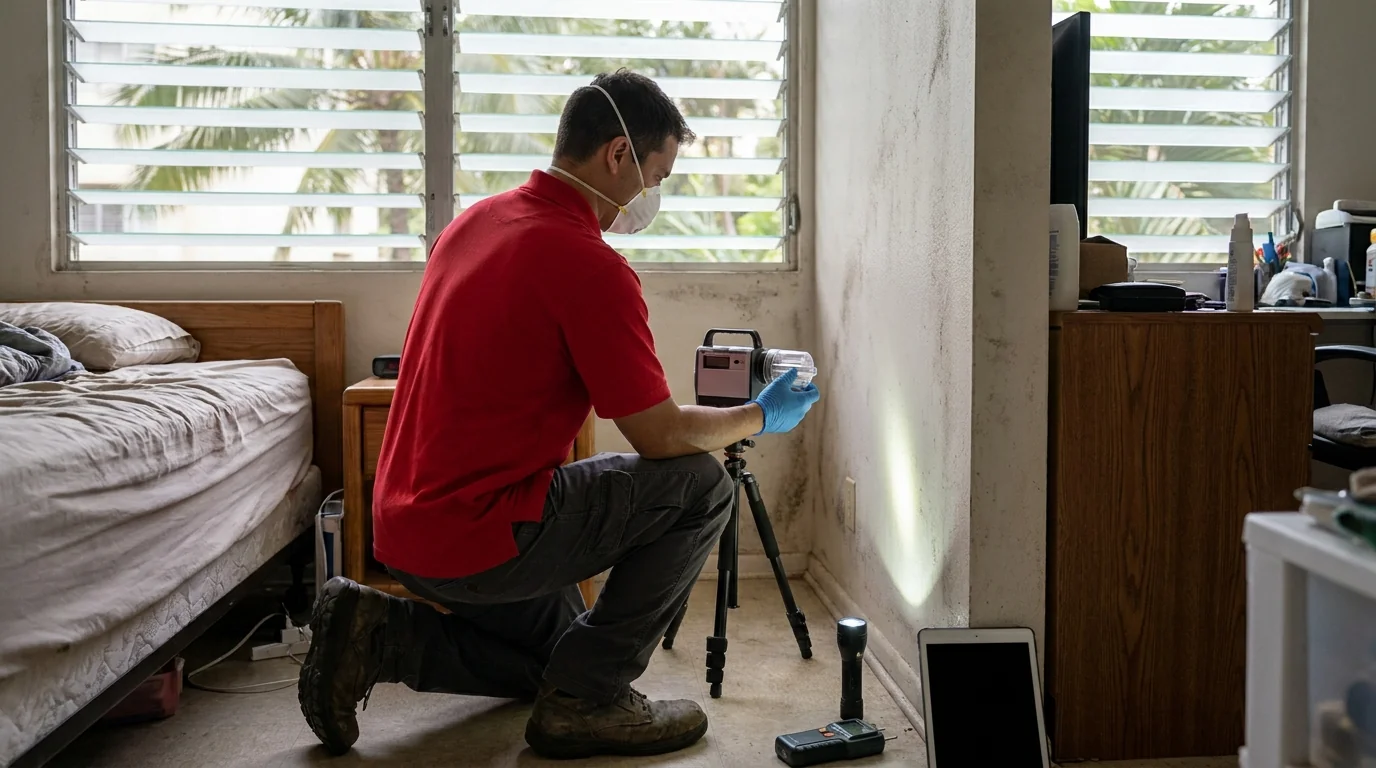
A mold inspection is not a visual walk-through with a flashlight. The process starts with a thorough moisture mapping of the property — using thermal imaging and calibrated moisture meters to find elevated readings inside walls, under flooring, and in ceiling cavities that look dry to the eye. In Kaimuki’s older homes, this step is especially important because single-wall construction means the interior finish and the exterior cladding are often the same board, with no insulation cavity to buffer moisture movement.
Once suspect areas are identified, air samples and surface samples are collected. Air samples measure the concentration and species of mold spores circulating in the indoor environment and compare them to an outdoor baseline taken the same day. Surface samples — tape lifts or swabs from visible growth — identify the specific mold genus present. That distinction matters: some species are more aggressively allergenic than others, and the remediation scope is calibrated accordingly.
All samples are sent to an accredited third-party laboratory. Written results typically return within two to five business days, and the inspection report documents moisture readings, sample locations, lab findings, and a recommended action plan — the kind of documentation your insurance adjuster will ask for.
Reaching Kaimuki for an Inspection
The team dispatches from Honolulu and can reach Kaimuki around the clock — the neighborhood is a straightforward drive from central Honolulu, whether the approach is via H-1 to the Waialae exit or surface streets through the Palolo Valley fringe. For multigenerational homes with ohana units, scheduling is handled to minimize disruption to all occupants, not just the primary homeowner. If parking or access is tight near Kaimuki Community Park or on the narrower streets climbing toward Puu o Kaimuki Park, a quick call ahead keeps the appointment on track.
Local Note: What Single-Wall Construction Changes About Testing
One thing that surprises homeowners in Kaimuki’s older neighborhoods is how quickly mold testing reveals hidden growth that remediation contractors would otherwise miss. Because single-wall homes have no insulation layer, a moisture meter reading on the interior surface is essentially reading the structural framing directly. That means elevated readings are more immediately actionable — but it also means that a wall that reads dry on the surface can still have mold growing on the back face of the same board, where condensation from outside air contacts the cooler interior. Inspectors familiar with this construction type know to cross-reference thermal imaging with moisture data rather than relying on either alone. It’s a detail that matters in Kaimuki in a way it simply doesn’t in a post-1990 home with fiberglass batt insulation.
If mold testing confirms active growth, photograph the affected areas thoroughly before any work begins — that documentation supports your insurance claim and gives your adjuster a clear picture of pre-remediation conditions.
If you’ve noticed a persistent musty smell, visible discoloration on walls or ceilings, or recently dealt with a water intrusion in your Kaimuki home or commercial space, call (808) 349-3407 to schedule a mold inspection and testing assessment. Getting accurate data now is always less costly than discovering the extent of the problem after drywall has to come down.
Mold Inspection and Testing in Kaimuki: Service Coverage
Frequently Asked Questions
How fast can you arrive for mold inspection and testing in Kaimuki?
Are the older single-wall homes on Wilhelmina Rise more likely to have hidden mold than newer construction?
How long does a mold inspection take for a typical Kaimuki home, and when do lab results come back?
Can mold from a Waialae Avenue commercial kitchen spread into an adjacent residential unit?
What does mold testing actually measure, and how is it different from a visual inspection?
How much does mold inspection and testing typically cost for a Kaimuki property, and what affects the price?
Will my homeowners insurance cover mold inspection and testing in Kaimuki?
Mold Inspection and Testing response in Kaimuki
Most Kaimuki calls see a technician on-site within 60 minutes from our Honolulu headquarters.