Flood & Drying Equipment Rental in Kaimuki
24/7 flood & drying equipment rental in Kaimuki, HI. Call (808) 349-3407.
Our technicians are dispatched from our Honolulu, HI headquarters and are typically on-site in Kaimuki within 60 minutes of your call.
Old Kaimuki houses don’t forgive water. The single-wall wood-frame construction that makes this neighborhood so architecturally distinct — homes built when plantation-era lumber was the standard along the Waialae Avenue corridor and up toward Wilhelmina Rise — soaks up moisture fast and releases it slowly. When a supply line lets go or a storm pushes runoff through a carport on a hillside lot, the clock starts immediately. Our flood and drying equipment rental service gives Kaimuki homeowners and property managers direct access to professional-grade extraction pumps, air movers, and dehumidifiers — the same equipment used in full-service restoration jobs — so drying can begin before secondary damage sets in.
Why Kaimuki Properties Are Especially Vulnerable to Water Damage
Kaimuki’s housing stock is one of the oldest in Honolulu. Many homes in the 96816 ZIP code were built before 1950, when galvanized supply pipes were standard. Those pipes corrode from the inside out, and by the time a pinhole becomes a break, the water has often been seeping into wall cavities or subfloor framing for longer than anyone realized. Single-wall construction — one layer of tongue-and-groove boards between you and the exterior — means there’s no insulation cavity to slow moisture migration. Water hits wood directly and begins warping it within hours.
The hillside geography compounds the problem. Lots on Wilhelmina Rise and Maunalani Heights are graded to drain toward the street, but heavy Kona storm events overwhelm those grades. Runoff channels through carports, into ohana unit entries, and under raised foundations where air circulation is already limited by the tropical humidity. Kaimuki’s restaurant corridor along Waialae Avenue adds a commercial dimension: kitchen grease lines back up overnight, and a cook discovering standing water at 6 a.m. needs equipment on-site before the lunch rush, not a two-day wait for a contractor appointment.
What Equipment Rental Looks Like for Kaimuki Conditions
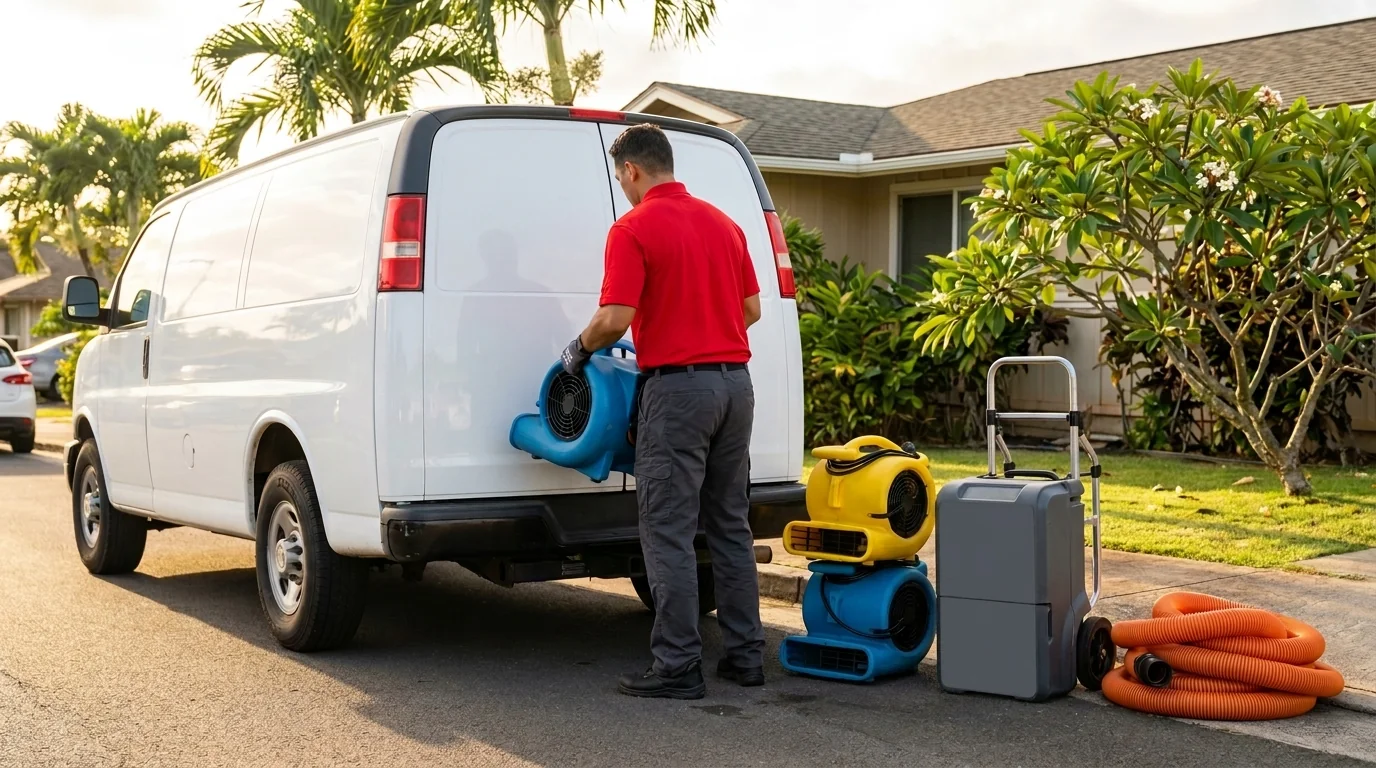
Not every water loss needs a full-service restoration crew. Some Kaimuki homeowners have the time and ability to manage the drying process themselves — they just need the right tools. A standard rental package for a residential loss in this area typically includes a truck-mount-style or portable extraction unit to pull standing water, multiple high-velocity air movers positioned to create cross-ventilation through affected rooms, and a commercial-grade low-grain refrigerant (LGR) dehumidifier sized to the square footage.
For single-wall construction, positioning matters more than it does in a modern framed home. Because the wall assembly is so thin, air movers need to be angled to pull moisture from the surface of the boards rather than simply circulating room air. We walk renters through placement before they leave with the equipment — which rooms to prioritize, how many air changes per hour to target, and what readings on a moisture meter should look like before the equipment comes back. Multigenerational households with ohana units also need to think about noise levels and access, and we can advise on quieter dehumidifier models when a tenant is still in place.
Getting Equipment to Kaimuki Quickly
AAA Water Damage Restoration & Carpet Care operates around the clock, and Kaimuki is a straightforward run from our Honolulu base — H-1 to Waialae Avenue puts you in the heart of the neighborhood in minutes, and we know the side streets well enough to navigate the one-way patterns near Kaimuki Community Park without delay. Call (808) 349-3407 any time and we can confirm availability, discuss the scope of your loss, and arrange same-day pickup or delivery depending on what the situation calls for.
For commercial losses along the Waialae Avenue business district, we’re accustomed to early-morning calls and can coordinate equipment drop-off before a business needs to open. Residential calls from the quieter streets near Chaminade University or the upper hillside addresses get the same response — we don’t triage by neighborhood.
Local Note: What Single-Wall Construction Means for Drying Timelines
Here’s something specific to working in Kaimuki that renters should know before they set a drying schedule: single-wall wood construction dries differently than the double-wall framing common in newer Honolulu builds. Because there’s no insulated cavity, the boards themselves must release moisture through their exposed face — and older Douglas fir or redwood lumber, which is dense and tight-grained, does this more slowly than modern framing lumber. A room that looks surface-dry after 24 hours may still read elevated on a pin-type moisture meter at the board seams. Plan for 48–72 hours of continuous equipment run time in a typical single-wall room, and check readings at the seams, not just the face of the boards. Pulling equipment too early is the most common reason a Kaimuki water loss turns into a mold problem two weeks later.
When you’re ready to get drying equipment on-site in Kaimuki, call (808) 349-3407. We’ll help you size the right package for your home’s construction and get the clock running in the right direction.
Flood & Drying Equipment Rental in Kaimuki: Service Coverage
Frequently Asked Questions
How fast can you arrive for flood & drying equipment rental in Kaimuki?
Are the older wood-frame homes on Wilhelmina Rise harder to dry than newer construction, and does that affect how long I'll need the equipment?
Can I rent equipment for an overnight water loss at a commercial kitchen on Waialae Avenue, and can delivery happen before the business opens?
My Kaimuki home has an ohana unit with a tenant still in place — are there quieter dehumidifier options that won't disrupt them?
What size dehumidifier do I need for a typical Kaimuki single-wall home with a flooded subfloor area?
How should I document the damage in my 96816 home before I start using rental equipment, in case I file an insurance claim?
Flood & Drying Equipment Rental response in Kaimuki
Most Kaimuki calls see a technician on-site within 60 minutes from our Honolulu headquarters.