
When a pipe bursts, the first 10 minutes matter more than the next 10 hours. Shut off the main water supply valve immediately — don’t wait to find the source of the leak — then cut power to any rooms where water is pooling near outlets or appliances. Once the water stops flowing and the electricity is safe, document everything with your phone camera before touching anything else. The steps below walk you through the full response, from the moment you hear that rush of water to the point where your home is dry and structurally sound again.
Step 1 — Stop the Water and Make the Space Safe
Your main shutoff valve is almost always located where the water line enters the house — in Hawaii homes, that’s typically near the exterior wall closest to the street, sometimes in a utility closet or under the kitchen sink in older Honolulu construction. Turn it clockwise until it stops. If the valve is corroded and won’t budge, call your water utility (Board of Water Supply for most of Oahu) to shut it off at the meter.
Once water stops flowing:
- Cut power at the breaker panel to any room with standing water. Water and live circuits are a lethal combination, and even a thin film of water on a floor can conduct current.
- Open windows and exterior doors if it’s safe to do so. Hawaii’s humidity is already high — you don’t want a closed, wet space sitting for hours.
- Move valuables, documents, and electronics to a dry area. Wet paper and electronics degrade fast.
- Put on rubber-soled shoes before walking through standing water — you don’t know what’s in it or whether the floor underneath is structurally compromised.
Do not re-enter a room where the ceiling is sagging or bulging. A ceiling holding standing water can collapse without warning.
Step 2 — Document Before You Clean Anything
This step feels counterintuitive when water is spreading across your floor, but skipping it can cost you significantly on your insurance claim. Photograph and video every affected area before you move furniture, pull up rugs, or start mopping.
- Capture the burst pipe or the point of failure if you can see it.
- Photograph water lines on walls, wet flooring, and any damaged belongings.
- Note the time and date on your phone — metadata helps with claims.
- Check adjacent rooms, closets, and the ceiling below (if the burst was on an upper floor). Water travels along joists and inside walls before it shows itself.
Once you’ve documented, contact your homeowner’s insurance carrier to report the loss. Ask specifically about your policy’s requirements for mitigating further damage — most policies require you to take reasonable steps to prevent additional loss, which is why the next steps matter.
Step 3 — Remove Standing Water and Start Drying Immediately
Mold can begin colonizing wet porous materials — drywall, subfloor, carpet padding — within 24 to 48 hours in warm, humid conditions. In Honolulu, where temperatures rarely drop below 70°F and humidity stays elevated year-round, that window is on the shorter end. Every hour of standing water accelerates the damage.
What you can do right now:
- Use a wet/dry shop vac to extract standing water from hard floors. Don’t use a regular household vacuum — it’s a fire and shock hazard.
- Pull up saturated area rugs and move them outside or to a garage to dry. Rugs trap moisture against the subfloor and dramatically slow drying.
- Lift the edges of wall-to-wall carpet if you can — the padding underneath acts like a sponge and will stay wet long after the surface feels dry.
- Set up fans to move air across wet surfaces. Box fans pointed at the floor are better than nothing, but they won’t dry inside walls or under cabinets.
- Run your air conditioner — it dehumidifies as it cools, which helps. A portable dehumidifier in the affected room adds meaningful capacity.
If water has reached the subfloor, traveled into wall cavities, or soaked into cabinetry, household fans won’t be enough. Structural drying requires commercial-grade air movers and dehumidifiers that move significantly more air volume and pull moisture from materials that look dry on the surface.
What NOT to Do After a Pipe Bursts
Some common instincts make the situation worse:
- Don’t use a regular vacuum or hair dryer on standing water or saturated materials.
- Don’t turn the heat up to speed drying — higher temperatures increase the rate of mold growth in wet materials.
- Don’t assume the damage is contained to what you can see. Water follows the path of least resistance inside walls, under flooring, and along ceiling joists. A small wet spot on the surface often means a much larger wet area behind it.
- Don’t delay pulling up wet carpet and padding hoping they’ll dry in place. Carpet padding is dense foam — it holds water like a mattress and will stay wet for days, feeding mold the whole time.
- Don’t paint or patch over wet drywall. Sealing moisture inside a wall cavity creates a perfect mold environment. The wall needs to dry completely — often verified with a moisture meter — before any repairs.
- Don’t throw away damaged items until your insurance adjuster has seen them or you’ve documented them thoroughly. Discarding damaged property before documentation can complicate your claim.
When to Call a Water Damage Professional
Some burst pipe situations are manageable with a shop vac and fans. Most are not. Call a professional restoration company when:
- Water has been sitting for more than a few hours, especially overnight.
- The burst pipe is behind a wall, under a slab, or in a ceiling — anywhere you can’t directly access the source.
- You can smell a musty or earthy odor, which can indicate mold is already present (this is especially relevant if the pipe leaked slowly before it fully burst).
- Flooring is buckling, soft, or spongy underfoot — signs the subfloor has absorbed significant moisture.
- The affected area is larger than roughly 10 square feet, or involves multiple rooms.
- An appliance supply line — refrigerator, dishwasher, washing machine, water heater — was the source. Appliance leak cleanup often involves water that traveled under cabinetry and into adjacent spaces that are hard to reach without moving equipment.
Professional water damage restoration uses moisture meters and thermal imaging cameras to find water that’s invisible to the eye, then places commercial drying equipment in a pattern calibrated to the specific materials and square footage. The goal is to bring every affected material back to its pre-loss moisture content — not just to make surfaces feel dry.
The Recovery Timeline: What Comes After the Emergency
Once extraction and drying equipment is running, the work isn’t done — it’s just shifted from emergency response to structured recovery.
Days 1–3: Equipment runs continuously. A technician should check moisture readings daily to confirm drying is progressing and adjust equipment placement if needed.
Days 3–5: Most residential drying jobs reach target moisture levels within three to five days, depending on material types and the severity of saturation. Concrete slabs and hardwood floors take longer than drywall.
After drying is confirmed: Damaged drywall, insulation, and flooring can be removed and replaced. This is also the point where a mold assessment makes sense if the water sat for an extended period before drying began.
Carpet: Heavily saturated carpet and padding are often not salvageable, particularly if the water sat more than 24 hours or if the source was anything other than clean supply-line water. A professional can assess whether cleaning and reinstallation is viable or whether replacement is the more practical path.
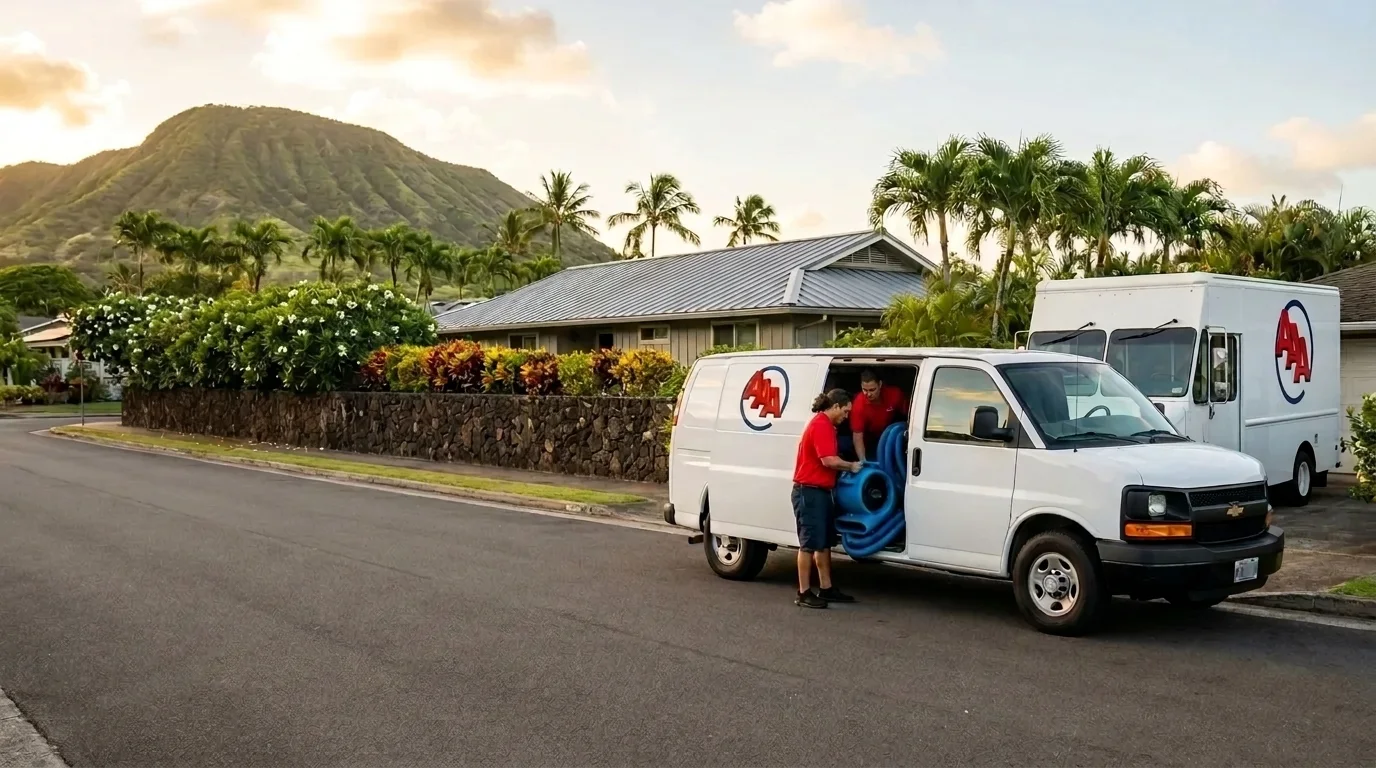
If you’re working through a burst pipe right now and the damage is beyond what a shop vac can handle, AAA Water Damage Restoration & Carpet Care serves Honolulu and the surrounding areas — reach them at (808) 349-3407. Even if you’re not ready to call yet, use this checklist to make sure you’re not leaving moisture behind that will cost you more to fix later.