
Mold Inspection and Testing in Diamond Head
24/7 mold inspection and testing in Diamond Head, HI. Call (808) 349-3407.
Our technicians are dispatched from our Honolulu, HI headquarters and are typically on-site in Diamond Head within 60 minutes of your call.
The stretch of coastline running from Kaimana Beach toward Black Point is one of the most visually dramatic addresses in Hawaii — and one of the most mold-prone. Salt-laden trade winds push moisture into every seam of the Gold Coast’s vintage 1950s and 1960s co-op and condo towers, while aging cast-iron plumbing quietly weeps behind walls for months before anyone notices. By the time a resident smells something musty or spots a ceiling stain, mold colonies may already be well established. A professional mold inspection and testing assessment tells you exactly what you’re dealing with — and gives you documented evidence that matters for your co-op board, your insurer, and your own peace of mind.
Why Diamond Head Properties See Elevated Mold Risk
The geography here creates a near-perfect environment for mold growth. Diamond Head State Monument funnels consistent onshore airflow directly into the neighborhoods below, keeping relative humidity elevated even on sunny days. Buildings along the Kapiolani Park frontage and up into Diamond Head Terrace sit close enough to the ocean that exterior walls accumulate salt deposits, which accelerate corrosion on pipe fittings and window frames alike.
The real culprit in many Gold Coast high-rises, though, is vertical plumbing. A corroded riser or a failed valve on an upper floor can introduce water into multiple units before the leak is even discovered. That slow, hidden moisture is exactly the condition mold thrives in — dark, damp, and undisturbed for weeks or longer. In estate homes around Black Point, the problem often looks different: large footprints, high ceilings, and premium materials like natural stone and hardwood that can harbor mold in ways that standard visual checks miss entirely.
Our Mold Inspection and Testing Process in Diamond Head
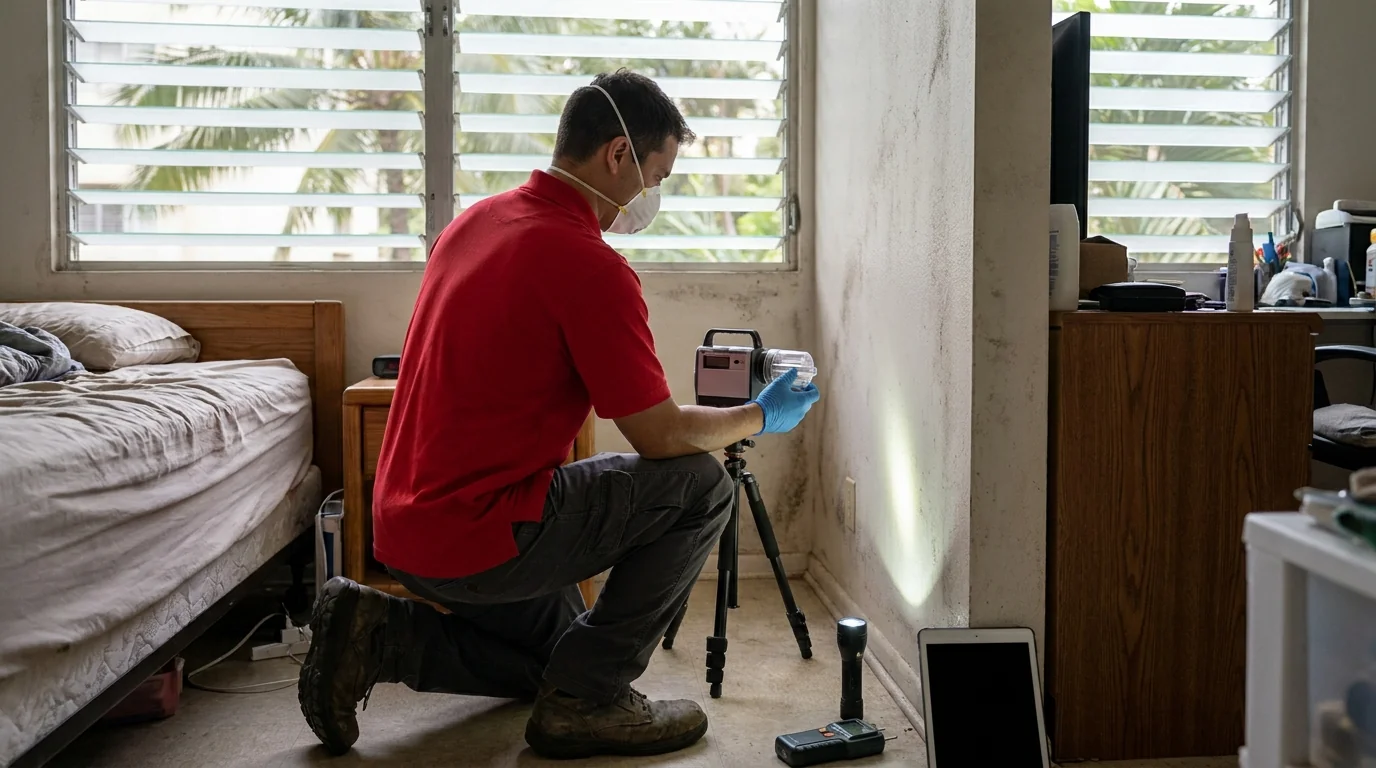
A thorough mold assessment in this area goes well beyond shining a flashlight at a water stain. The process starts with a detailed visual inspection of every moisture-prone area — under sinks, inside mechanical closets, around window tracks, and along any wall that shares a plumbing chase. In older high-rises, that means paying close attention to the ceiling and wall assemblies directly below and adjacent to known riser locations.
From there, we collect air samples and, where surface growth is visible or suspected, swab samples. Those samples go to an accredited third-party laboratory for analysis. Lab results identify the specific mold genera present, the spore concentration in the indoor air compared to outdoor baseline readings, and whether levels fall within ranges that warrant remediation. You receive a written report with findings, sample data, and photographs — documentation that co-op boards and resident managers can submit directly to the association’s insurer or use to support a remediation scope of work.
For estate homes with high-end finishes, we also conduct moisture mapping using thermal imaging and calibrated moisture meters, which can detect elevated readings inside walls and under flooring without any destructive investigation.
Reaching Diamond Head from Honolulu
Our team dispatches from Honolulu and can reach the 96815 and 96816 ZIP codes that cover the Diamond Head corridor around the clock — we answer calls 24/7. The most direct route runs along Kalakaua Avenue and into the neighborhood via Diamond Head Road, keeping drive times short even during peak Waikiki traffic. For high-rise buildings with secured parking and lobby check-in, we coordinate arrival with the building manager or front desk in advance so equipment staging doesn’t create delays.
Diamond Head HOA and Co-op Coordination
Many of the buildings along this coastline are governed by co-op boards or condominium associations with their own rules about vendor access, common-area work windows, and documentation requirements. We’re accustomed to working within those frameworks. The inspection report we produce is formatted to support association-level claims and board presentations — not just a one-page summary, but a full written assessment with lab data, moisture readings, and photo documentation that gives decision-makers what they need to act.
If your building’s association requires a clearance test after any remediation work, we can coordinate that independently so the process moves without administrative bottlenecks.
Local Note
One pattern that comes up repeatedly in the Gold Coast buildings: mold is often found not at the original leak point but one or two units away from it, in wall cavities where water tracked laterally before anyone noticed. In buildings with original 1950s-era concrete block construction, moisture migrates differently than it does in modern framed walls — it can travel farther and stay hidden longer. If your unit is adjacent to a unit that had a known water intrusion event, even if your own walls look fine, an air quality test is worth doing. Spores don’t respect property lines.
If you’re seeing unexplained allergy symptoms, a persistent musty odor, or a water stain that “dried out” months ago, call us at (808) 349-3407. We’ll schedule an inspection, collect samples, and get you a lab-backed report that tells you exactly where you stand — so you can make informed decisions about your home or building.
Mold Inspection and Testing in Diamond Head: Service Coverage
Frequently Asked Questions
How fast can you arrive for mold inspection and testing in Diamond Head?
Are the older co-op buildings along the Gold Coast more prone to hidden mold than newer condos?
A riser leak on a floor above mine was repaired last month — do I still need mold testing in my Diamond Head unit?
How does the trade wind humidity around Diamond Head State Monument affect indoor mold risk?
What does a mold inspection report include, and can I use it with my co-op board or insurer?
How long does a mold inspection typically take in a Diamond Head high-rise unit versus an estate home near Black Point?
Will my homeowners insurance cover mold inspection and testing in Diamond Head?
Mold Inspection and Testing response in Diamond Head
Most Diamond Head calls see a technician on-site within 60 minutes from our Honolulu headquarters.